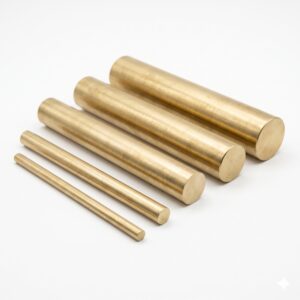
Brass round bar is a versatile material that is valued for its excellent combination of strength, corrosion resistance, and machinability.
Available in a range of different options, including naval brass round bar, 360 brass round bar, and half-round brass road, they are a widely used material with a range of applications across different industries.
Brass is an alloy composed primarily of copper and zinc. Brass round bar is a cylindrical piece of brass that is commonly used in various applications across construction, manufacturing, and crafting due to its versatility. They can be machined, welded, and soldered with the round shape allowing for easy handling and machining.
The metal is available in a range of sizes including 10mm Brass Round Bar, and 8mm Brass Round Bar. Brass round bar remains a popular choice for a wide range of applications for versatility, ease of machining and excellent corrosion resistance properties.
What processes are used to create brass round bars?
A brass round bar is a cylindrical piece of brass that is commonly used in various applications due to its excellent combination of strength, corrosion resistance, and machinability. Brass is an alloy primarily composed of copper and zinc, although other elements may be added to achieve specific properties.
Brass round bars are often used in construction, manufacturing, and crafting due to their versatility. They can be machined, welded, and soldered, making them suitable for a wide range of projects. The round shape allows for easy handling and machining, making it a preferred choice for many applications.
How is brass round bar made?
Brass round bars are manufactured using a series of carefully controlled processes. It begins with the melting of raw materials such as copper and zinc in a furnace to create a molten brass alloy. Additional elements may then be introduced to adjust the compositions of the alloy and to achieve specific properties.
Once the correct alloy mix is achieved it is then poured into molds. The initial shapes are then heated and passed through rolling mills to reduce thickness and shape them into long cylindrical bars.
This hot rolling process refines the grain structure of the brass enhancing its mechanical properties. The bars may then undergo cold drawing or extrusion to achieve the required dimensions and surface finish.
When soldering brass, surfaces should be free from dirt and oxidation. A suitable solder alloy should be used to control the heat and avoid overheating. It’s essential to ensure that your workspace is well-ventilated.
High-Quality Brass Round Bar from Forward Metals
If you’re looking for brass bar stock for sale, then Forward Metals can help. Whether you’re looking for a half round brass rod, solid brass round bar or a brass hollow bar, our experienced team can help you find what you’re looking for.
We are a family-run business based in Worcestershire providing local and nationwide deliveries, as well as local collection
Call 01905 796 152 or email sales@forwardmetalsonline.co.uk to find out more