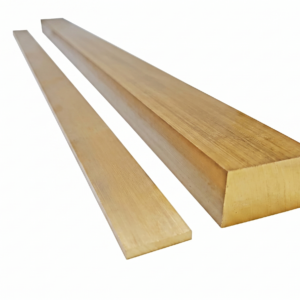
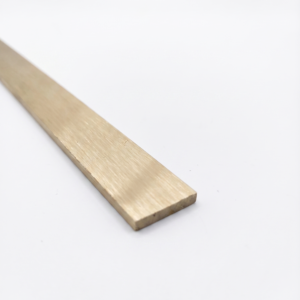
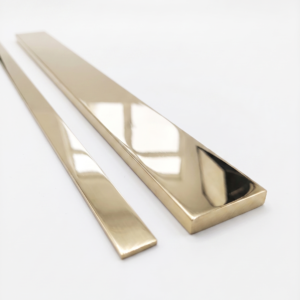
What are the mechanical properties of brass flat bars?
Brass flat bars are prized for their strength and ductility, which make them ideal for architectural and industrial applications. The tensile strength of brass flat bars typically ranges from 350 to 550 MPa, depending on the composition and treatment of the brass. The hardness of brass flat bars can also vary, but they generally maintain a good balance between strength and malleability, allowing for effective forming and machining.
Electrical Conductivity of Brass Flat Bars
While not as conductive as pure metals like copper, brass flat bars have around 28% the electrical conductivity, and brass can be used in electrical and electronic applications. Brass flat bars are usually used in manufacturing, but sometimes used in general engineering of electrical components.
Which Industries Are Brass Flat Bars Typically Used?
Brass flat bars are utilised across a diverse range of industries. In the automotive sector, they are used for trim pieces and decorative accents. In the electrical industry, brass bars are employed in switchgear and components due to their conductivity and corrosion resistance. They find extensive use in the construction industry for architectural features such as handrails and trim, as well as in consumer goods like hardware and musical instruments due to their aesthetic appeal and durability.
How Are Brass Flat Bars Manufactured?
The manufacturing process of brass flat bars involves several steps, starting with the combination of copper and zinc, which are melted together to form brass. This molten brass is then cast into billets or slabs before being hot and cold rolled into flat bars. The specific thickness and width are achieved through further rolling and finishing processes, ensuring that the final product meets precise dimensional standards.
What Challenges are There When Working with Brass Compared to Other Metals?
Working with brass presents certain challenges when compared to other metals like steel or aluminium. Brass is generally softer, which means it can wear out faster during machining processes, but its low melting point and ductility make it easier to cast and form. The key challenge is managing the balance between machining speed and tool wear to optimise production efficiency without compromising the quality of the brass flat bars.
Is Brass a Sustainable Material?
Brass is considered a sustainable material because it is highly durable and recyclable. The longevity of brass products means they do not need frequent replacement, reducing waste and demand for raw materials. Brass can be recycled indefinitely without losing its properties, which minimises its environmental impact and makes any brass flat bar stock for sale an attractive option for the environmentally conscious industries.
Why Choose Forward Metals?
Choosing Forward Metals for brass flat bars means opting for a supplier that prioritises quality, customer service, and sustainability. Our products meet stringent industry standards, ensuring reliability and performance. Forward Metals also offers competitive pricing and a wide selection of brass flat bars to meet diverse customer needs.
What Else Does Forward Metals Offer?
Beyond brass flat bars, Forward Metals provides a comprehensive range of metal products and services. Including custom metal cutting and preparation and the supply of other alloys; such as aluminium, and stainless steel. Our services are designed to be flexible and responsive, ensuring that we can accommodate both large industrial orders and small custom requests.